



OFFICIAL PUBLICATION OF THE NEBRASKA BANKERS ASSOCIATION

2026 Pub. 20 Issue 4

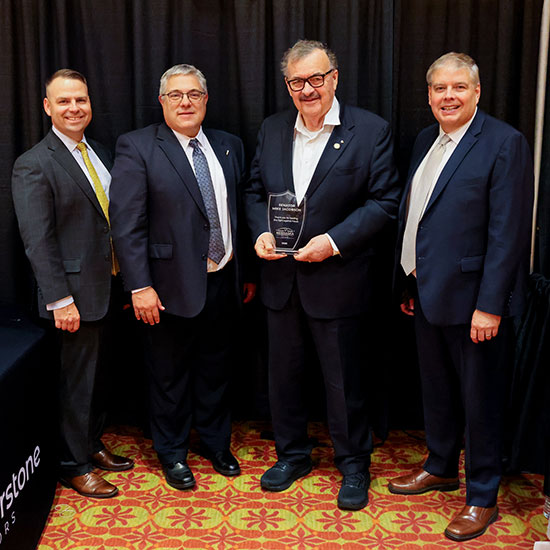
Four men holding an award

Nebraska Banks’ Tools to Combat Elder Financial Abuse

When Something Doesn’t Look Right

Above: Current and past NBA leadership recognize Sen. Mike Jacobson (North Platte) on behalf of the Fraud Free Nebraska Coalition for championing legislation to protect senior adults from fraud. Left to right: NBA General Counsel Ryan McIntosh, NBA Past Chair Mark Linville (Homestead Bank, Randolph), Nebraska Sen. Jacobson and NBA President & CEO Richard Baier

As all Nebraska bankers know, fraud is no longer a distant threat or an occasional customer-service challenge. It is a daily and growing risk for financial institutions across the country, and Nebraska is not immune. Nebraska bankers are often the last line of defense when an older customer is pressured to wire money overseas, drain a safe deposit box, add a new joint owner, change beneficiaries or move funds under suspicious circumstances.

That is why the Nebraska Bankers Association has worked with lawmakers, regulators, law enforcement, member banks and other partners to provide financial institutions with practical legal tools to help protect vulnerable adults and senior adults. The Nebraska Legislature recognized this need in 2020 with LB 909 and expanded those protections in 2026 with LB 838. Together, these laws give Nebraska financial institutions discretion, protection and flexibility when they reasonably believe financial exploitation may have occurred or is being attempted.

A Legislative Response Built Around Bankers’ Real-World Experience

LB 909 began as LB 853, introduced in 2020 by Sen. Matt Williams of Gothenburg. After testimony from NBA member banks and the director of the Nebraska Department of Banking and Finance, the bill was amended into LB 909, passed on July 21, 2020, and became effective that November. The law created Nebraska’s transaction-hold and notification framework for suspected financial exploitation.

In 2026, Sen. Mike Jacobson of North Platte introduced LB 838 to build on that framework by authorizing financial institutions to establish an “authorized contact” program. LB 838 passed on April 10, 2026, and went into effect on July 18, 2026.

The legislative findings, now contained in statute, reflect the balance bankers must strike every day, recognizing that financial institutions are uniquely positioned to detect exploitation, while also acknowledging banks’ contractual and federal and state law obligations to follow valid customer instructions faithfully and in a timely manner. Just as important, the law does not impose a duty to override valid customer instructions. It gives banks discretion to act when the facts warrant action. That distinction is important. Nebraska’s law is not a mandate that every suspicious circumstance lead to a hold, refusal or notification. It is a shield and a tool, allowing a bank to determine whether action is appropriate based on the information available at the time.

What the Law Allows Banks to Do

Under Neb. Rev. Stat. § 8-2903, when a financial institution or employee reasonably believes that financial exploitation of a vulnerable adult or senior adult may have occurred, may have been attempted, is occurring or is being attempted, the institution may delay or refuse a transaction.

The definition of “transaction” is broad. It includes transfers or disbursements, wires, ACH transactions, money orders, cashier’s checks, checks, changes in ownership or account access, loans or extensions of credit, encumbrances on property, and changes to beneficiary designations or contract rights at death. In practical terms, the law applies to many situations bankers actually see, not just withdrawals.

A transaction hold generally expires upon the earlier of 30 business days after the institution first acted, the point at which the institution is satisfied the transaction will not result in exploitation, or termination by court order. However, unless otherwise directed by a court, a financial institution may extend the hold if it reasonably believes exploitation may continue or continue to be attempted.

Third-Party Notification and Authorized Contacts

Nebraska law also allows banks to notify a third party reasonably associated with a vulnerable adult or senior adult. This may include a parent, spouse, adult child, sibling, family member, close associate, co-owner, authorized signer, beneficiary, trustee, conservator, guardian, attorney-in-fact, fiduciary or attorney known to represent the customer.

LB 838 adds another option: the authorized contact. An authorized contact is an adult designated by a vulnerable adult or senior adult to be contacted in the event of an emergency, loss of contact with the customer or suspected financial exploitation. Authorized contact programs are optional, and a financial institution is immune from liability for choosing not to implement one. If a bank does implement a program and acts reasonably, the bank is protected. The law also provides that a financial institution is not liable for the actions of an authorized contact and may decline to interact with one if the contact may be involved in exploitation or if interaction is not in the customer’s best interests.

This flexibility is critical. In some cases, a trusted contact may be the fastest way to interrupt a scam. In others, the person closest to the customer may be part of the problem. Nebraska law gives banks room to use judgment.

Immunity, Safe Harbors and Privacy Considerations

Bankers have long been concerned that acting too quickly could create liability, while failing to act could allow devastating customer losses. Nebraska’s elder financial abuse law addresses that concern directly. A financial institution, its bank holding company, and its employees, agents, officers and directors are immune from civil, criminal or administrative liability for delaying or refusing a transaction, or for choosing not to delay or refuse a transaction, under the law.

The law also includes important safe harbors. A refusal to engage in a transaction under the elder abuse law does not constitute wrongful dishonor under Nebraska’s Uniform Commercial Code. A reasonable belief that payment of a check will facilitate financial exploitation also constitutes reasonable grounds to doubt collectability for purposes of federal funds availability laws and Regulation CC, as referenced in the Nebraska statute.

Privacy concerns are addressed as well. The Gramm-Leach-Bliley Act and Regulation P contain exceptions that allow disclosures to protect against or prevent actual or potential fraud, unauthorized transactions, claims or liability, and to comply with federal, state or local legal requirements.

A Practical Call to Action for Nebraska Banks

The best fraud prevention tool is still a well-trained banker who knows the customer, recognizes a red flag and understands how to escalate concerns. Regardless of bank size or bank employee scope of duties, the message is the same: Nebraska law gives you tools to act when something does not look right.

Banks should consider written procedures for transaction holds, third-party notification, authorized contacts, escalation, documentation and referrals to law enforcement and Adult Protective Services. The law does not require every financial institution to build the same program, but every institution should understand the authority it has and the protections available when staff act reasonably and in good faith.

Nebraska bankers have always been more than transaction processors. They are trusted advisers, community leaders and often the first people to see when a customer is being targeted. LB 909 and LB 838 give banks additional tools, but it will be the judgment, training and commitment of Nebraska bankers that turn those tools into real protection. When a red flag appears, Nebraska banks now have more than concern. They have authority, discretion and legal protection to help stop exploitation before a lifetime of savings disappears.


Four men holding an award

Nebraska Banks’ Tools to Combat Elder Financial Abuse

When Something Doesn’t Look Right

Above: Current and past NBA leadership recognize Sen. Mike Jacobson (North Platte) on behalf of the Fraud Free Nebraska Coalition for championing legislation to protect senior adults from fraud. Left to right: NBA General Counsel Ryan McIntosh, NBA Past Chair Mark Linville (Homestead Bank, Randolph), Nebraska Sen. Jacobson and NBA President & CEO Richard Baier

As all Nebraska bankers know, fraud is no longer a distant threat or an occasional customer-service challenge. It is a daily and growing risk for financial institutions across the country, and Nebraska is not immune. Nebraska bankers are often the last line of defense when an older customer is pressured to wire money overseas, drain a safe deposit box, add a new joint owner, change beneficiaries or move funds under suspicious circumstances.

That is why the Nebraska Bankers Association has worked with lawmakers, regulators, law enforcement, member banks and other partners to provide financial institutions with practical legal tools to help protect vulnerable adults and senior adults. The Nebraska Legislature recognized this need in 2020 with LB 909 and expanded those protections in 2026 with LB 838. Together, these laws give Nebraska financial institutions discretion, protection and flexibility when they reasonably believe financial exploitation may have occurred or is being attempted.

A Legislative Response Built Around Bankers’ Real-World Experience

LB 909 began as LB 853, introduced in 2020 by Sen. Matt Williams of Gothenburg. After testimony from NBA member banks and the director of the Nebraska Department of Banking and Finance, the bill was amended into LB 909, passed on July 21, 2020, and became effective that November. The law created Nebraska’s transaction-hold and notification framework for suspected financial exploitation.

In 2026, Sen. Mike Jacobson of North Platte introduced LB 838 to build on that framework by authorizing financial institutions to establish an “authorized contact” program. LB 838 passed on April 10, 2026, and went into effect on July 18, 2026.

The legislative findings, now contained in statute, reflect the balance bankers must strike every day, recognizing that financial institutions are uniquely positioned to detect exploitation, while also acknowledging banks’ contractual and federal and state law obligations to follow valid customer instructions faithfully and in a timely manner. Just as important, the law does not impose a duty to override valid customer instructions. It gives banks discretion to act when the facts warrant action. That distinction is important. Nebraska’s law is not a mandate that every suspicious circumstance lead to a hold, refusal or notification. It is a shield and a tool, allowing a bank to determine whether action is appropriate based on the information available at the time.

What the Law Allows Banks to Do

Under Neb. Rev. Stat. § 8-2903, when a financial institution or employee reasonably believes that financial exploitation of a vulnerable adult or senior adult may have occurred, may have been attempted, is occurring or is being attempted, the institution may delay or refuse a transaction.

The definition of “transaction” is broad. It includes transfers or disbursements, wires, ACH transactions, money orders, cashier’s checks, checks, changes in ownership or account access, loans or extensions of credit, encumbrances on property, and changes to beneficiary designations or contract rights at death. In practical terms, the law applies to many situations bankers actually see, not just withdrawals.

A transaction hold generally expires upon the earlier of 30 business days after the institution first acted, the point at which the institution is satisfied the transaction will not result in exploitation, or termination by court order. However, unless otherwise directed by a court, a financial institution may extend the hold if it reasonably believes exploitation may continue or continue to be attempted.

Third-Party Notification and Authorized Contacts

Nebraska law also allows banks to notify a third party reasonably associated with a vulnerable adult or senior adult. This may include a parent, spouse, adult child, sibling, family member, close associate, co-owner, authorized signer, beneficiary, trustee, conservator, guardian, attorney-in-fact, fiduciary or attorney known to represent the customer.

LB 838 adds another option: the authorized contact. An authorized contact is an adult designated by a vulnerable adult or senior adult to be contacted in the event of an emergency, loss of contact with the customer or suspected financial exploitation. Authorized contact programs are optional, and a financial institution is immune from liability for choosing not to implement one. If a bank does implement a program and acts reasonably, the bank is protected. The law also provides that a financial institution is not liable for the actions of an authorized contact and may decline to interact with one if the contact may be involved in exploitation or if interaction is not in the customer’s best interests.

This flexibility is critical. In some cases, a trusted contact may be the fastest way to interrupt a scam. In others, the person closest to the customer may be part of the problem. Nebraska law gives banks room to use judgment.

Immunity, Safe Harbors and Privacy Considerations

Bankers have long been concerned that acting too quickly could create liability, while failing to act could allow devastating customer losses. Nebraska’s elder financial abuse law addresses that concern directly. A financial institution, its bank holding company, and its employees, agents, officers and directors are immune from civil, criminal or administrative liability for delaying or refusing a transaction, or for choosing not to delay or refuse a transaction, under the law.

The law also includes important safe harbors. A refusal to engage in a transaction under the elder abuse law does not constitute wrongful dishonor under Nebraska’s Uniform Commercial Code. A reasonable belief that payment of a check will facilitate financial exploitation also constitutes reasonable grounds to doubt collectability for purposes of federal funds availability laws and Regulation CC, as referenced in the Nebraska statute.

Privacy concerns are addressed as well. The Gramm-Leach-Bliley Act and Regulation P contain exceptions that allow disclosures to protect against or prevent actual or potential fraud, unauthorized transactions, claims or liability, and to comply with federal, state or local legal requirements.

A Practical Call to Action for Nebraska Banks

The best fraud prevention tool is still a well-trained banker who knows the customer, recognizes a red flag and understands how to escalate concerns. Regardless of bank size or bank employee scope of duties, the message is the same: Nebraska law gives you tools to act when something does not look right.

Banks should consider written procedures for transaction holds, third-party notification, authorized contacts, escalation, documentation and referrals to law enforcement and Adult Protective Services. The law does not require every financial institution to build the same program, but every institution should understand the authority it has and the protections available when staff act reasonably and in good faith.

Nebraska bankers have always been more than transaction processors. They are trusted advisers, community leaders and often the first people to see when a customer is being targeted. LB 909 and LB 838 give banks additional tools, but it will be the judgment, training and commitment of Nebraska bankers that turn those tools into real protection. When a red flag appears, Nebraska banks now have more than concern. They have authority, discretion and legal protection to help stop exploitation before a lifetime of savings disappears.

Scroll to Top