





OFFICIAL PUBLICATION OF THE NEBRASKA BANKERS ASSOCIATION

2026 Pub. 20 Issue 5

a robot scammer

The Forensics Behind Fraud Investigations

Sheriff Aaron Hanson on Evidence, Prevention and Bank Cooperation

Most fraud victims don’t think they’ll ever become victims. They’re careful. They ignore suspicious emails. They don’t hand out personal information to strangers.

Yet every year, scammers convince ordinary people to send thousands of dollars, surrender sensitive data or trust someone who doesn’t exist.

So how do investigators track down a fraudster who’s hiding behind spoofed phone numbers, impersonated identities and digital transactions? NBA staff spoke with Douglas County Sheriff Aaron Hanson to discuss the forensic work that helps crack fraud cases, the tactics scammers are using right now, and the simple “red flags” everyone should know.

How does your office work with banks, businesses and other agencies to combat fraud?

Financial institutions and businesses are often well-positioned to identify suspicious activity early, and their cooperation can be extremely valuable. We work with banks, businesses and other agencies to share information, preserve records, identify patterns and respond to the reports of suspected fraud. Another extremely helpful collaboration with financial institutions is working with tellers who recognize common red flags that a customer is being scammed, enabling them to stop a transaction early, before funds are lost.

Can you walk us through the steps of investigating a fraud suspect? What first raises the red flags?

A fraud investigation typically begins with a complaint; this can be a report from a financial institution, a victim or another source. The first step is to establish what happened, who may have been affected and whether there is evidence of a crime. Red flags can vary depending on the scheme, but they often include transactions that do not fit a person’s normal activity, unusual requests for money or personal info, forged or altered documents, inconsistent explanations or a pattern of activity involving multiple victims.

Crime solving is often pictured as fingerprints and DNA. When it comes to fraud cases, what kinds of forensic tools or digital evidence are investigators looking at?

In fraud cases, investigators may examine bank and credit card records, transaction histories, emails, text messages, phone records, IP addresses, device data, blockchain transaction records, computers and mobile devices. The goal is to connect the activity to a person and determine how the scheme operated; sometimes this requires combining various records to build a clear timeline and identify the links among people, accounts and transactions.

Have advances in technology made these digital investigations easier or harder?

Technology has made both sides of the investigation more complicated. The volume of digital information can be challenging, but investigators have access to more information and better tools for analyzing large volumes of data.

The biggest concern is the combo of technology, personalization and speed. Criminals can reach large numbers of people quickly, create convincing content and move money before a victim realizes what’s happening. We are also watching the continued use of cryptocurrency, digital payment platforms, social media and AI-generated content in fraud schemes.

How have scams and fraud schemes evolved over the last few years? What’s occurring today that people may not have encountered five or 10 years ago?

Scams have become more sophisticated, personalized and easier to carry out at scale. The amount of online data available for scammers to purchase — legally or otherwise — is astounding. Criminals may use AI-generated images, fabricated documents, cloned voices or other tactics to impersonate real people and organizations. Social media can also provide information that helps a scammer make a message appear personal and credible.

The technology changes, but the underlying goal is often the same: to create trust and urgency to convince someone to send money or share personal info. The important point is that a convincing message is not necessarily a legitimate message. Verify the request independently before acting.

How is law enforcement preparing for these emerging threats?

Law enforcement agencies have to continue adapting. That includes training investigators on digital evidence, financial crimes, cryptocurrency, online investigations and new technologies. It also means maintaining relationships with agencies and organizations that can assist when a case extends beyond local jurisdiction. No single agency can address every fraud scheme alone. Collaboration, specialized training and timely information sharing are important parts of preparing for these threats.

What gives you the confidence that law enforcement can stay ahead of these threats?

Law enforcement continues to develop new investigative tools, improve training and build partnerships with financial institutions, technology companies and other agencies. Investigators are becoming more familiar with digital evidence and the ways criminals use technology. 

What are some of the most common scams facing Nebraskans right now?

Common scams include impersonation schemes — like government impersonation or fraudulent requests involving family members — bank and financial institution fraud, online shopping scams, investment and cryptocurrency scams, romance scams and employment scams. Many of these are national or international schemes; a scam does not have to originate in Nebraska to have a real impact on someone in our community.

What’s one tactic that tends to catch people off guard?

When the scammer already knows something about them — their name, a family member’s name, a recent purchase or info that appears to come from a legitimate account. That familiarity can make the request seem more credible than it is. Fear and urgency remain two of the most common tools scammers use. They may claim that an account is about to be closed, that a loved one is in trouble, that a warrant has been issued or that payment must be made immediately. The goal is to keep the victim from slowing down and verifying the info.

What psychological tricks should people be aware of?

Scammers often use authority, fear, urgency, familiarity and a desire to help. They may also create a sense of secrecy — telling the victim not to speak with family members, bank employees or law enforcement — or make the victim feel that they’ve already invested too much to stop.

If someone thinks they’ve been scammed, what should they do in the first hour?

Acting quickly is important. If money has been sent, contact your bank immediately and explain that you believe you’re a victim of financial fraud. Ask what steps are available to stop, reverse or otherwise flag the transaction. Preserve all evidence, including messages, emails, phone numbers, receipts, account info and screenshots. Also, report the incident to law enforcement. Prompt reporting may improve the chances of stopping a transaction and help recover the money if it has already been sent.

What misconceptions do people have about fraud victims?

One of the biggest misconceptions is that fraud victims are careless or that scams happen only to people who are not technologically savvy. That’s not true. These schemes are designed to manipulate people, and they can affect individuals of any age, income level or education.

People should not feel embarrassed about reporting fraud. Shame and embarrassment often delay reporting, and that can make it more difficult to recover funds or identify the suspect. Reporting the crime helps law enforcement understand the scope of the problem and may prevent someone else from becoming a victim.

How important is community education and public awareness in fighting fraud?

Public awareness is critical. Fraud prevention is not just an investigative issue; it’s a community safety issue, and everyone has a role in it. The more people understand how fraud schemes work, the more likely they are to recognize the red flags before money or personal information is lost. Education also helps reduce the stigma around a person reporting that they were a fraud victim. If someone knows they can report a suspected scam without being judged, they may be more likely to come forward quickly.

What are some red flags that should immediately make someone slow down, verify independently, and protect their personal information and money?

Be cautious when someone demands immediate action, threatens consequences, asks you to keep the interaction secret, requests payment through an unusual method, or contacts you unexpectedly about an account or financial problem. Other red flags include unfamiliar links, offers that sound too good to be true or a person who refuses to let you verify their identity independently. If something feels unusual, pause and check it before acting.

What can families do to protect themselves and loved ones from fraud?

Families can help by having regular conversations about scams, encouraging loved ones to verify unexpected requests and creating a plan for what to do if someone receives a suspicious message or phone call. It’s also important to approach these conversations without judgment. The goal is to make sure people feel comfortable asking for help if they believe they’ve been a victim of fraud.
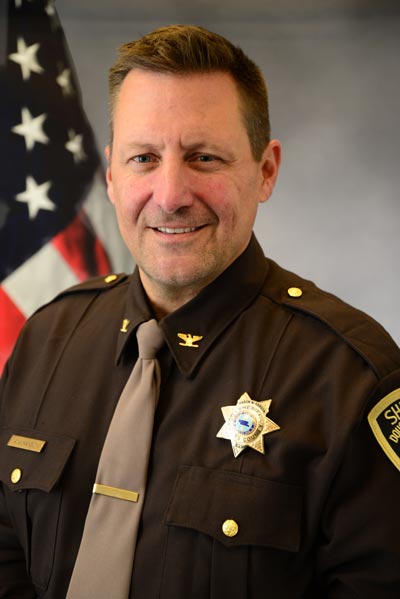
Sherriff Aaron Hanson

More About Sheriff Hanson

What inspired you to pursue a career in law enforcement?
My path to law enforcement began as a teen. I was working at a small business in the Florence area and witnessed a robbery. After seeing how the Omaha police officer who responded handled the call and interacted with the victim, I was impressed. Conversations with that officer about his experiences piqued my curiosity in the field and really hooked me.

What does a typical week as sheriff look like for you?
Law enforcement is more about problem-solving than I think many people realize. There really is no such thing as a “typical week” in law enforcement. But every day brings new opportunities to learn, grow and serve our community.

What’s one thing about Nebraska or your community that makes you proud to serve here?
The people.

What’s something about you that might surprise people?
I am an apiarist (beekeeper). I also enjoy hunting and gardening.

If you weren’t in law enforcement, what do you think you’d be doing?
I would probably be a hydrologist. My dad was a chemist and oversaw the Douglas County landfill. I have always been interested in water use and groundwater protection.

a robot scammer

The Forensics Behind Fraud Investigations

Sheriff Aaron Hanson on Evidence, Prevention and Bank Cooperation

Most fraud victims don’t think they’ll ever become victims. They’re careful. They ignore suspicious emails. They don’t hand out personal information to strangers.

Yet every year, scammers convince ordinary people to send thousands of dollars, surrender sensitive data or trust someone who doesn’t exist.

So how do investigators track down a fraudster who’s hiding behind spoofed phone numbers, impersonated identities and digital transactions? NBA staff spoke with Douglas County Sheriff Aaron Hanson to discuss the forensic work that helps crack fraud cases, the tactics scammers are using right now, and the simple “red flags” everyone should know.

How does your office work with banks, businesses and other agencies to combat fraud?

Financial institutions and businesses are often well-positioned to identify suspicious activity early, and their cooperation can be extremely valuable. We work with banks, businesses and other agencies to share information, preserve records, identify patterns and respond to the reports of suspected fraud. Another extremely helpful collaboration with financial institutions is working with tellers who recognize common red flags that a customer is being scammed, enabling them to stop a transaction early, before funds are lost.

Can you walk us through the steps of investigating a fraud suspect? What first raises the red flags?

A fraud investigation typically begins with a complaint; this can be a report from a financial institution, a victim or another source. The first step is to establish what happened, who may have been affected and whether there is evidence of a crime. Red flags can vary depending on the scheme, but they often include transactions that do not fit a person’s normal activity, unusual requests for money or personal info, forged or altered documents, inconsistent explanations or a pattern of activity involving multiple victims.

Crime solving is often pictured as fingerprints and DNA. When it comes to fraud cases, what kinds of forensic tools or digital evidence are investigators looking at?

In fraud cases, investigators may examine bank and credit card records, transaction histories, emails, text messages, phone records, IP addresses, device data, blockchain transaction records, computers and mobile devices. The goal is to connect the activity to a person and determine how the scheme operated; sometimes this requires combining various records to build a clear timeline and identify the links among people, accounts and transactions.

Have advances in technology made these digital investigations easier or harder?

Technology has made both sides of the investigation more complicated. The volume of digital information can be challenging, but investigators have access to more information and better tools for analyzing large volumes of data.

The biggest concern is the combo of technology, personalization and speed. Criminals can reach large numbers of people quickly, create convincing content and move money before a victim realizes what’s happening. We are also watching the continued use of cryptocurrency, digital payment platforms, social media and AI-generated content in fraud schemes.

How have scams and fraud schemes evolved over the last few years? What’s occurring today that people may not have encountered five or 10 years ago?

Scams have become more sophisticated, personalized and easier to carry out at scale. The amount of online data available for scammers to purchase — legally or otherwise — is astounding. Criminals may use AI-generated images, fabricated documents, cloned voices or other tactics to impersonate real people and organizations. Social media can also provide information that helps a scammer make a message appear personal and credible.

The technology changes, but the underlying goal is often the same: to create trust and urgency to convince someone to send money or share personal info. The important point is that a convincing message is not necessarily a legitimate message. Verify the request independently before acting.

How is law enforcement preparing for these emerging threats?

Law enforcement agencies have to continue adapting. That includes training investigators on digital evidence, financial crimes, cryptocurrency, online investigations and new technologies. It also means maintaining relationships with agencies and organizations that can assist when a case extends beyond local jurisdiction. No single agency can address every fraud scheme alone. Collaboration, specialized training and timely information sharing are important parts of preparing for these threats.

What gives you the confidence that law enforcement can stay ahead of these threats?

Law enforcement continues to develop new investigative tools, improve training and build partnerships with financial institutions, technology companies and other agencies. Investigators are becoming more familiar with digital evidence and the ways criminals use technology. 

What are some of the most common scams facing Nebraskans right now?

Common scams include impersonation schemes — like government impersonation or fraudulent requests involving family members — bank and financial institution fraud, online shopping scams, investment and cryptocurrency scams, romance scams and employment scams. Many of these are national or international schemes; a scam does not have to originate in Nebraska to have a real impact on someone in our community.

What’s one tactic that tends to catch people off guard?

When the scammer already knows something about them — their name, a family member’s name, a recent purchase or info that appears to come from a legitimate account. That familiarity can make the request seem more credible than it is. Fear and urgency remain two of the most common tools scammers use. They may claim that an account is about to be closed, that a loved one is in trouble, that a warrant has been issued or that payment must be made immediately. The goal is to keep the victim from slowing down and verifying the info.

What psychological tricks should people be aware of?

Scammers often use authority, fear, urgency, familiarity and a desire to help. They may also create a sense of secrecy — telling the victim not to speak with family members, bank employees or law enforcement — or make the victim feel that they’ve already invested too much to stop.

If someone thinks they’ve been scammed, what should they do in the first hour?

Acting quickly is important. If money has been sent, contact your bank immediately and explain that you believe you’re a victim of financial fraud. Ask what steps are available to stop, reverse or otherwise flag the transaction. Preserve all evidence, including messages, emails, phone numbers, receipts, account info and screenshots. Also, report the incident to law enforcement. Prompt reporting may improve the chances of stopping a transaction and help recover the money if it has already been sent.

What misconceptions do people have about fraud victims?

One of the biggest misconceptions is that fraud victims are careless or that scams happen only to people who are not technologically savvy. That’s not true. These schemes are designed to manipulate people, and they can affect individuals of any age, income level or education.

People should not feel embarrassed about reporting fraud. Shame and embarrassment often delay reporting, and that can make it more difficult to recover funds or identify the suspect. Reporting the crime helps law enforcement understand the scope of the problem and may prevent someone else from becoming a victim.

How important is community education and public awareness in fighting fraud?

Public awareness is critical. Fraud prevention is not just an investigative issue; it’s a community safety issue, and everyone has a role in it. The more people understand how fraud schemes work, the more likely they are to recognize the red flags before money or personal information is lost. Education also helps reduce the stigma around a person reporting that they were a fraud victim. If someone knows they can report a suspected scam without being judged, they may be more likely to come forward quickly.

What are some red flags that should immediately make someone slow down, verify independently, and protect their personal information and money?

Be cautious when someone demands immediate action, threatens consequences, asks you to keep the interaction secret, requests payment through an unusual method, or contacts you unexpectedly about an account or financial problem. Other red flags include unfamiliar links, offers that sound too good to be true or a person who refuses to let you verify their identity independently. If something feels unusual, pause and check it before acting.

What can families do to protect themselves and loved ones from fraud?

Families can help by having regular conversations about scams, encouraging loved ones to verify unexpected requests and creating a plan for what to do if someone receives a suspicious message or phone call. It’s also important to approach these conversations without judgment. The goal is to make sure people feel comfortable asking for help if they believe they’ve been a victim of fraud.

Sherriff Aaron Hanson

More About Sheriff Hanson

What inspired you to pursue a career in law enforcement?
My path to law enforcement began as a teen. I was working at a small business in the Florence area and witnessed a robbery. After seeing how the Omaha police officer who responded handled the call and interacted with the victim, I was impressed. Conversations with that officer about his experiences piqued my curiosity in the field and really hooked me.

What does a typical week as sheriff look like for you?
Law enforcement is more about problem-solving than I think many people realize. There really is no such thing as a “typical week” in law enforcement. But every day brings new opportunities to learn, grow and serve our community.

What’s one thing about Nebraska or your community that makes you proud to serve here?
The people.

What’s something about you that might surprise people?
I am an apiarist (beekeeper). I also enjoy hunting and gardening.

If you weren’t in law enforcement, what do you think you’d be doing?
I would probably be a hydrologist. My dad was a chemist and oversaw the Douglas County landfill. I have always been interested in water use and groundwater protection.
Scroll to Top